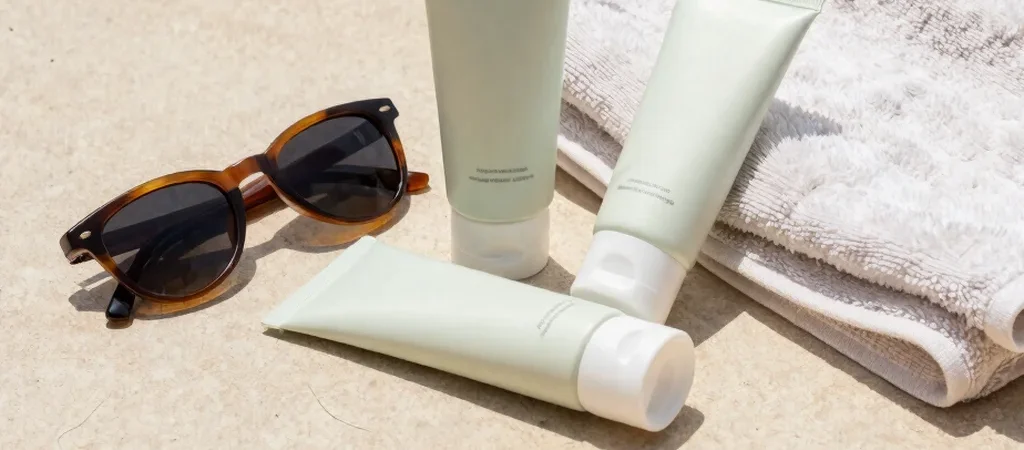
Standing in the sunscreen aisle, you can face a wall of SPF numbers and claims that sound nearly interchangeable. Start with the label details that mean something specific, then weigh the texture and format you’re most likely to use consistently.
Start With Broad Spectrum
In the United States, a “broad spectrum” label indicates that a sunscreen has been tested for protection against both UVA and UVB rays. SPF primarily describes protection from sunburn, so a high SPF number alone does not tell the whole story.
For everyday comparison, look for broad-spectrum protection and an SPF level recommended by trusted public health or dermatology sources. No sunscreen blocks every ray, and the number is not a promise that you can stay in the sun longer.
Read the Water Resistance
Sunscreens labeled water resistant will state whether that claim applies for 40 or 80 minutes. That matters at the pool, on a sweaty hike, or during a long day outside; it does not mean the product stays effective indefinitely in water.
Follow the directions on the specific product for reapplication, including after swimming or sweating. A formula that feels comfortable enough to apply as directed may be a more practical choice than one whose texture you avoid.
Choose a Format You’ll Use
Creams, lotions, sticks, and sprays can differ in feel and convenience, but the format itself is not a substitute for reading the label and applying the product as directed. If you compare mineral and chemical formulas, treat that as a preference question too: texture, finish, and ease of use can shape what fits your routine.
Mahlui may earn a commission if you purchase through affiliate links in our guides; that does not change what the label says or make a product right for everyone. For personal questions about sun protection, ask a qualified health professional. The useful first step in the aisle is simple: check broad-spectrum labeling, SPF, water-resistance directions, and whether you’ll actually reach for it.